

“Botai – Culture of the Great Steppe”
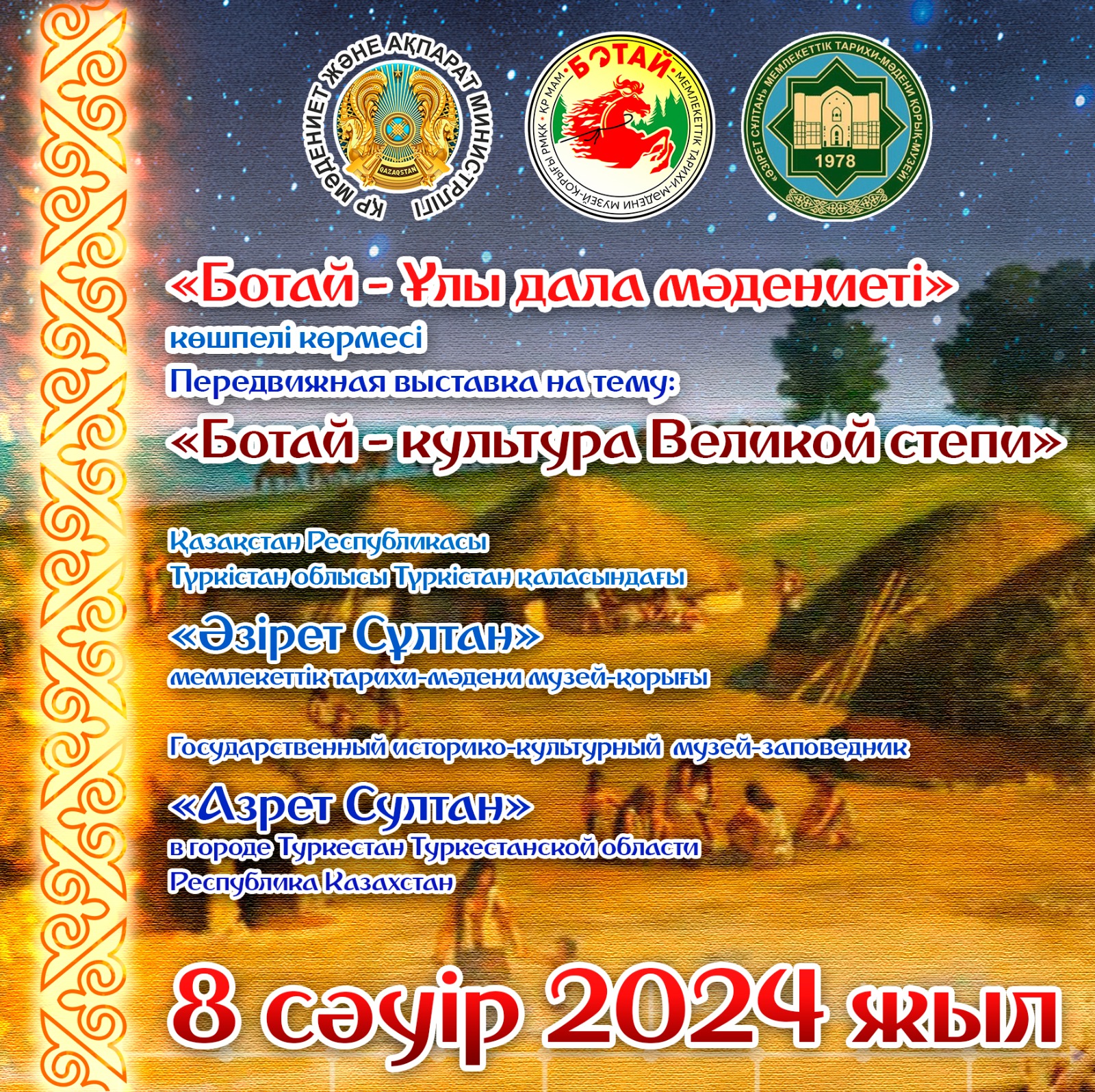
On April 8, 2024, the Republican State Enterprise “State Historical and Cultural Museum-Reserve ‘Botai’” of the Committee for Culture of the Ministry of Culture and Information of the Republic of Kazakhstan opened the republican traveling exhibition “Botai – Culture of the Great Steppe” at the State Historical and Cultural Museum-Reserve “Azret Sultan” in the city of Turkestan, in the Juma Mosque building.
The exhibition presented a range of archaeological finds from the Botai culture, including bone tools used in everyday life such as bone knives, harpoons, needles, and lancets, as well as stone implements including axes, discs, drills, and knives. Ceramic fragments and a human skull showing evidence of trepanation were also displayed.
The exhibition will run until May 2.
The Republican State Enterprise “State Historical and Cultural Museum-Reserve ‘Botai’” under the Committee of Culture of the Ministry of Culture and Information of the Republic of Kazakhstan organized an online round table on April 2, 2024, via the Zoom platform. The event was dedicated to the 100th anniversary of Kemal Akishev—a distinguished scientist, patriot, and educator—and the 125th anniver
The Republican State Enterprise “State Historical and Cultural Museum-Reserve ‘Botai’” under the Committee of Culture of the Ministry of Culture and Information of the Republic of Kazakhstan organized an online round table on April 2, 2024, via the Zoom platform. The event was dedicated to the 100th anniversary of Kemal Akishev—a distinguished scientist, patriot, and educator—and the 125th anniversary of the prominent geologist, academician, and state and public figure Kanysh Satpayev.
The purpose of the round table was to preserve the memory of these outstanding scientist, to share recollections of their scientific and public activities, to continue the work they initiated, and to present the results of ongoing research inspired by their legacy.
The discussions focused on current issues related to the preservation and development of the historical and cultural heritage of Kazakhstan.
The event was attended by heads of branch offices of the A. Kh. Margulan Institute of Archaeology, as well as research staff from museum-reserves across the Republic of Kazakhstan.
Excursion
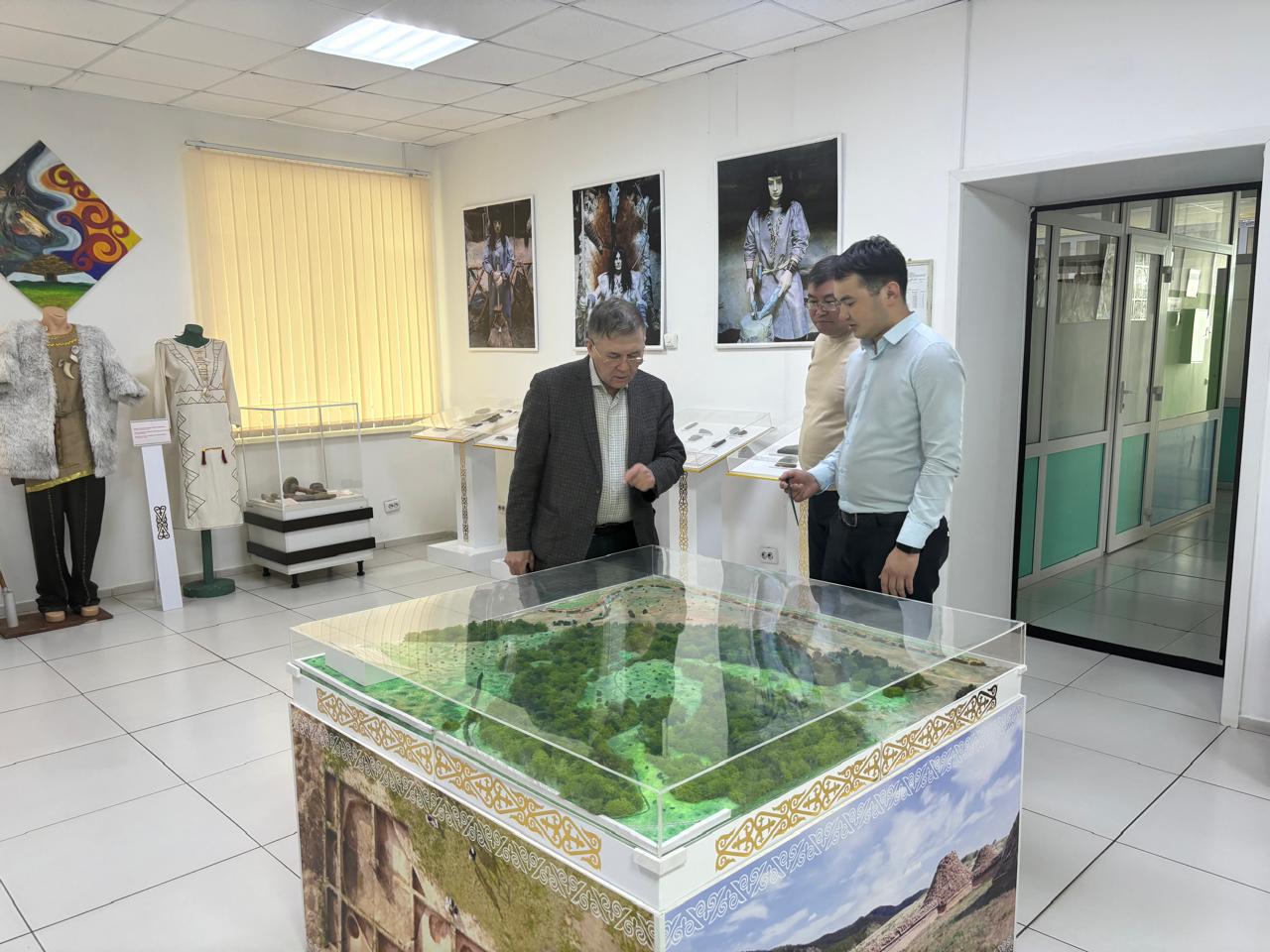
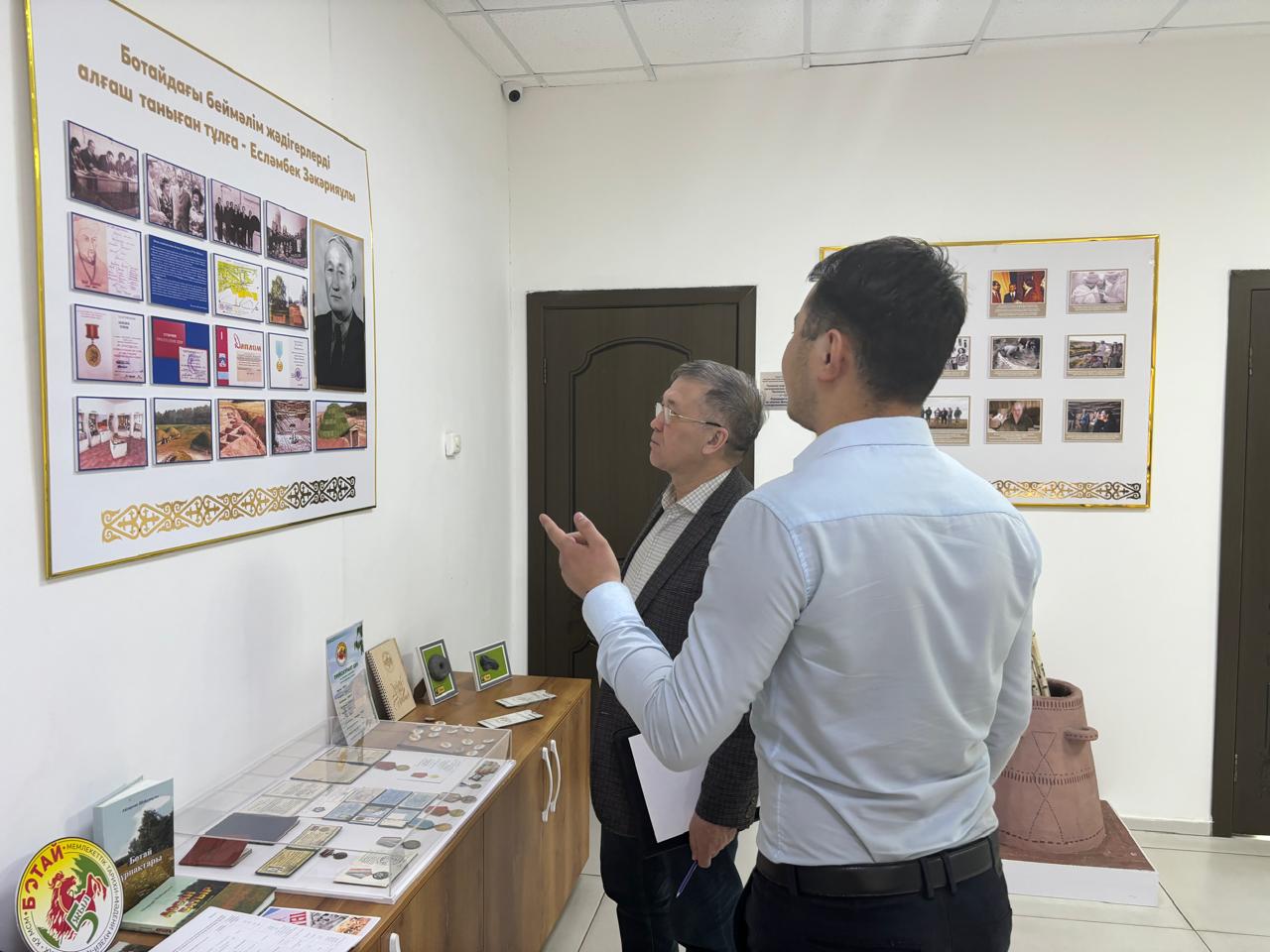
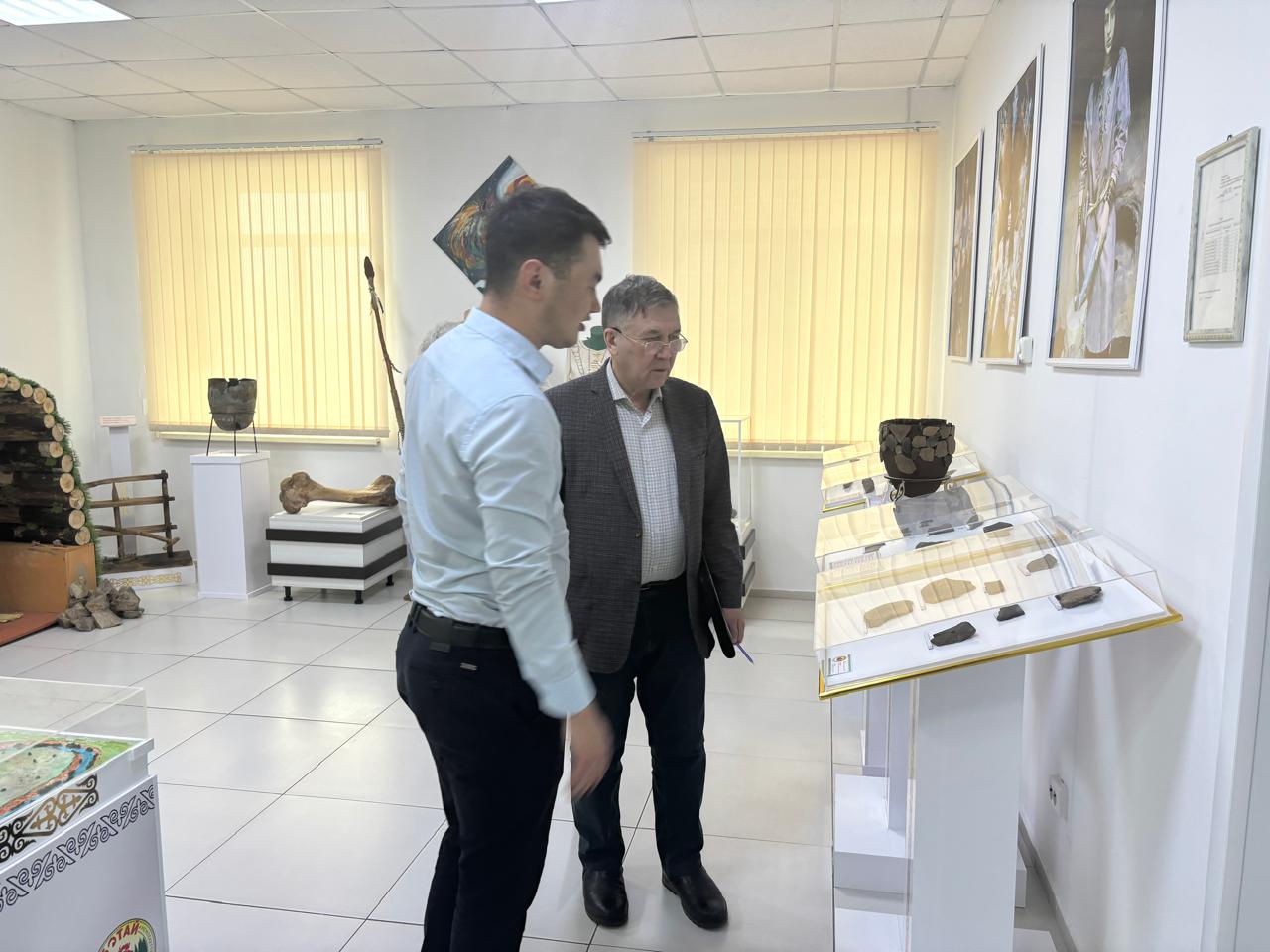
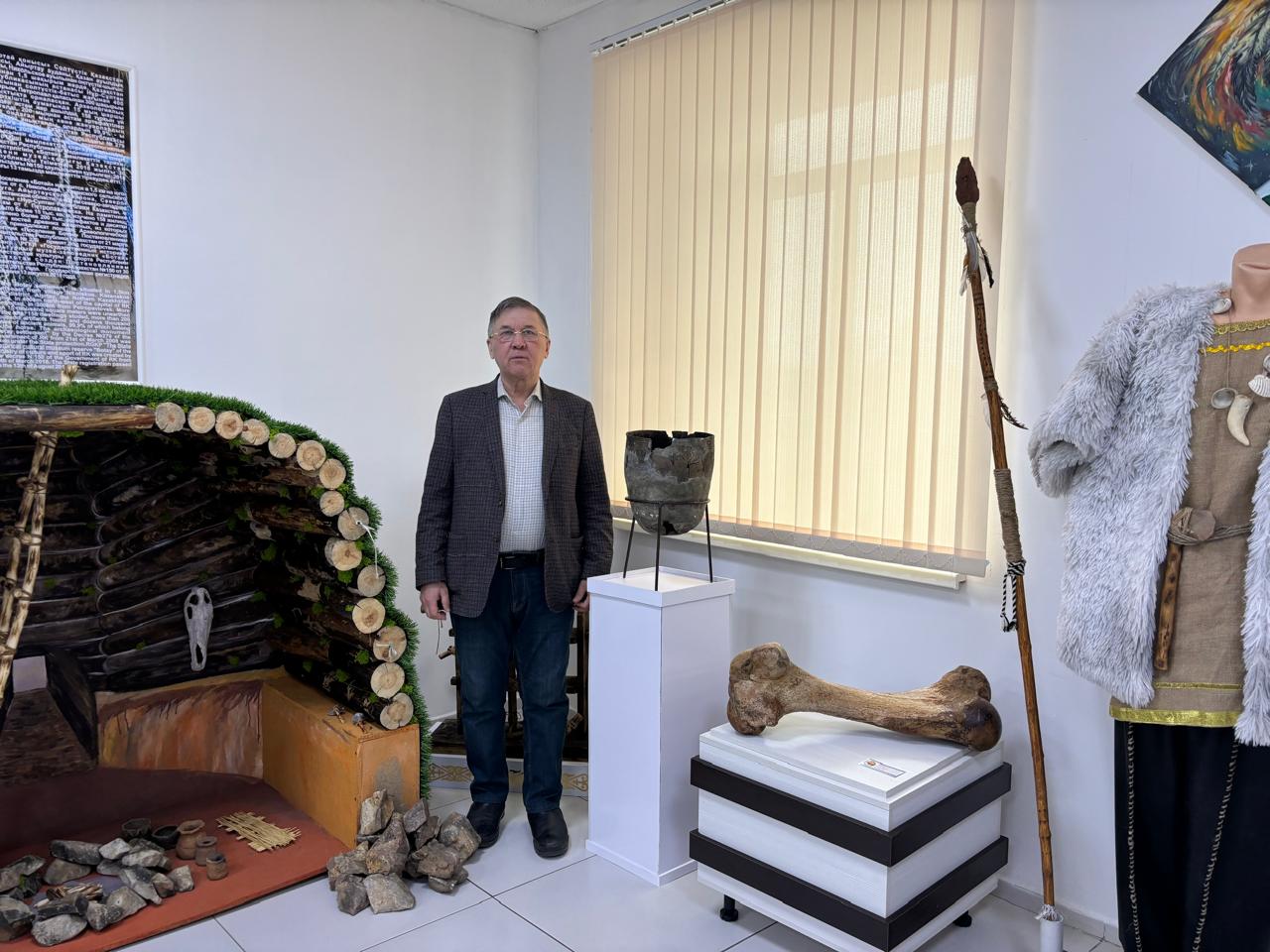
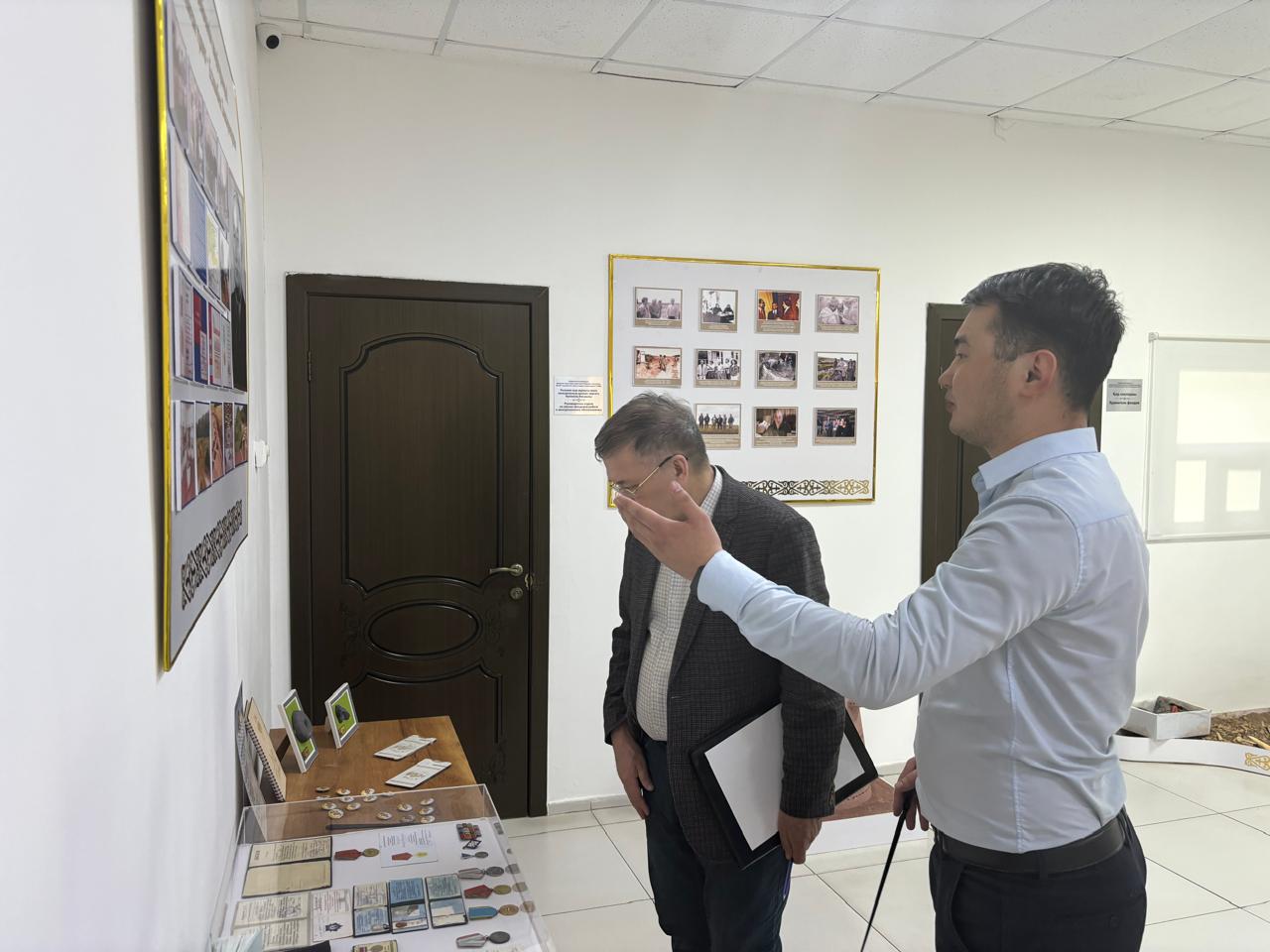
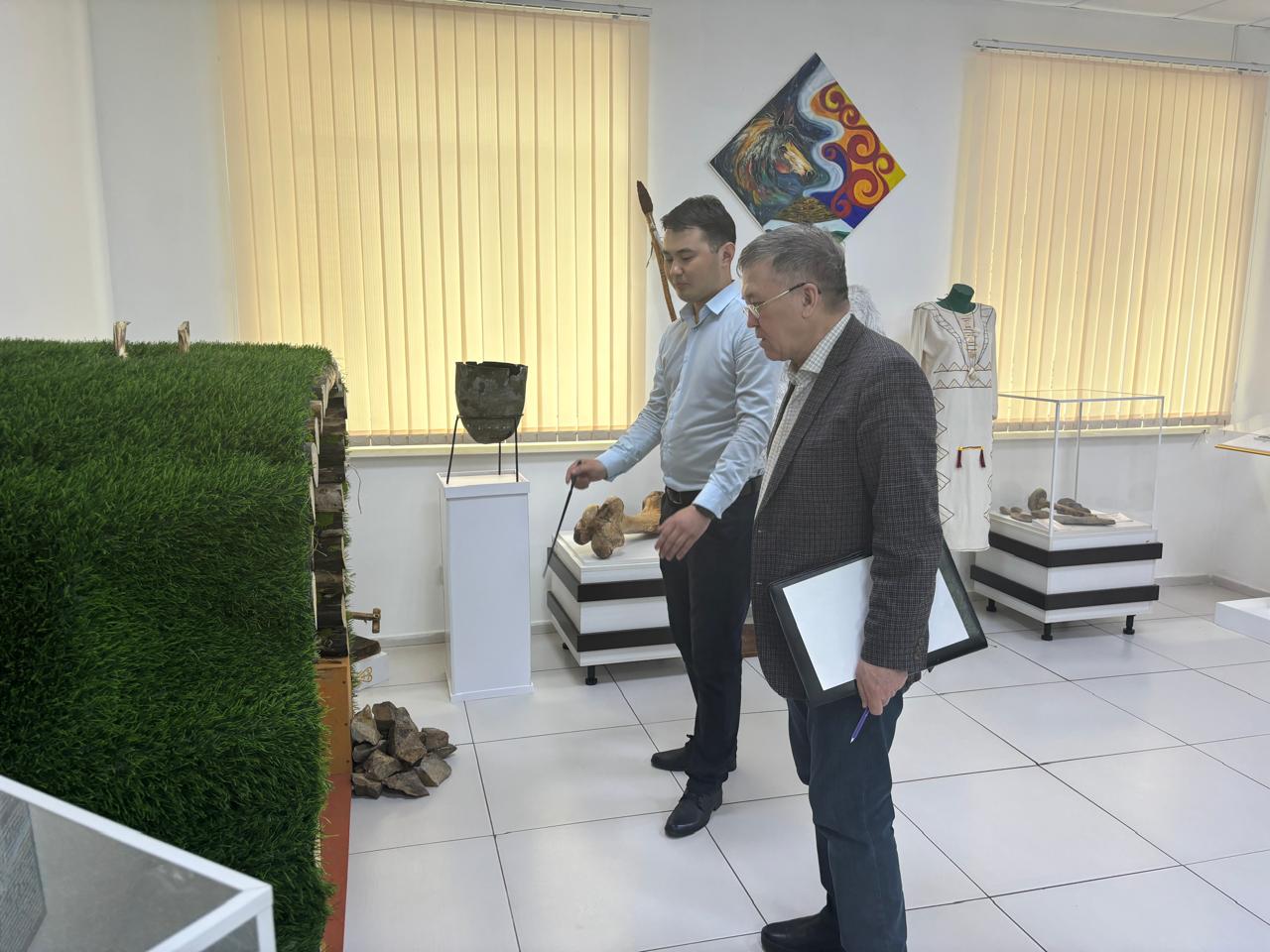
The State Historical and Cultural Museum-Reserve “Botai” was visited by writer, poet, and journalist Esengeldi Suyinov. The staff of the Botai Museum-Reserve organized a guided tour of the museum’s exhibition hall.
During the excursion, the writer became acquainted with the valuable exhibits of the Botai culture.
March 18 – Ұлттық киім күні (National Dress Day)
«Ұлттық киім – ұлт ажары» (“National clothing is the adornment of the nation”)
The team of the State Historical and Cultural Museum-Reserve “Botai” supports the «Ұлттық киім – ұлт ажары» challenge, aimed at promoting traditional attire among the public.
The main goal of the initiative is to popularize national clothing, to pass on the history and traditions of our ancestors to the younger generation, and to strengthen national values.